
BLOG & TIPS
PUSHrack L-Track Set: The Sturdy Base for Your Rear Bike Rack

At the heart of the PUSHrack system are two sturdy mounting rails that are attached horizontally to the tailgate of your van: so-called airline tracks.
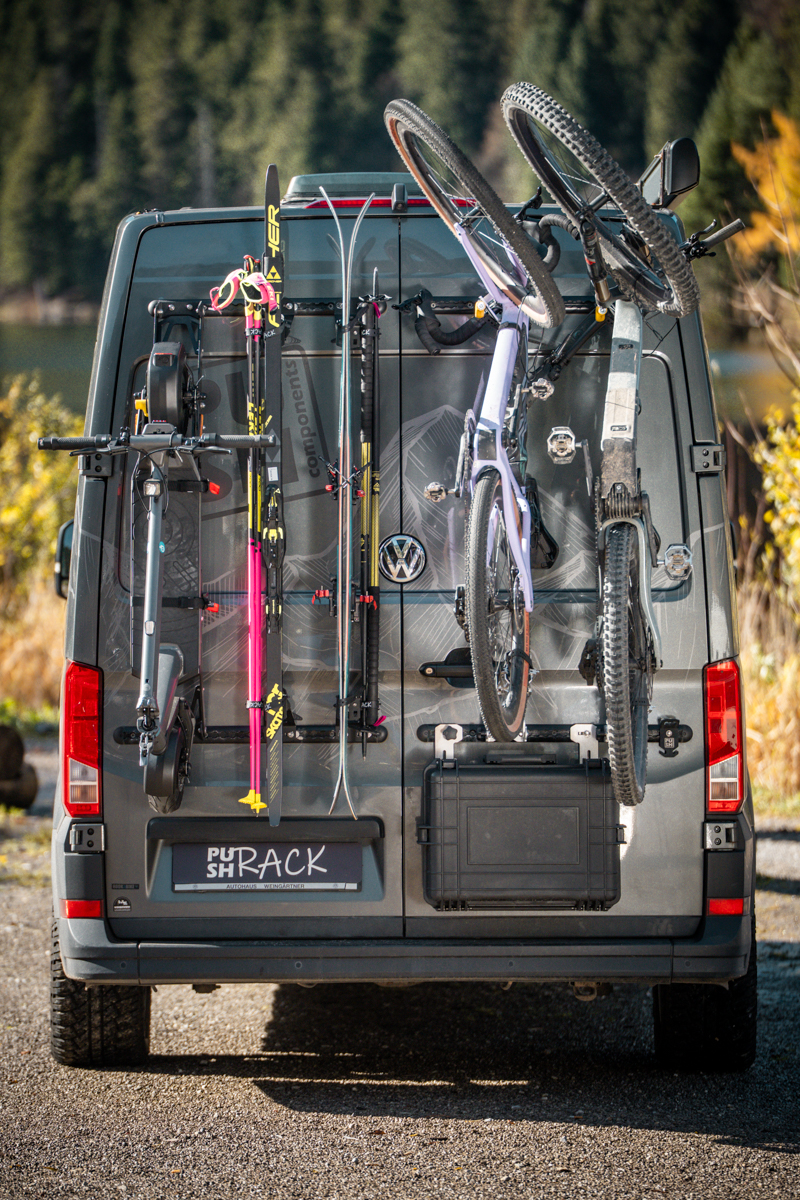
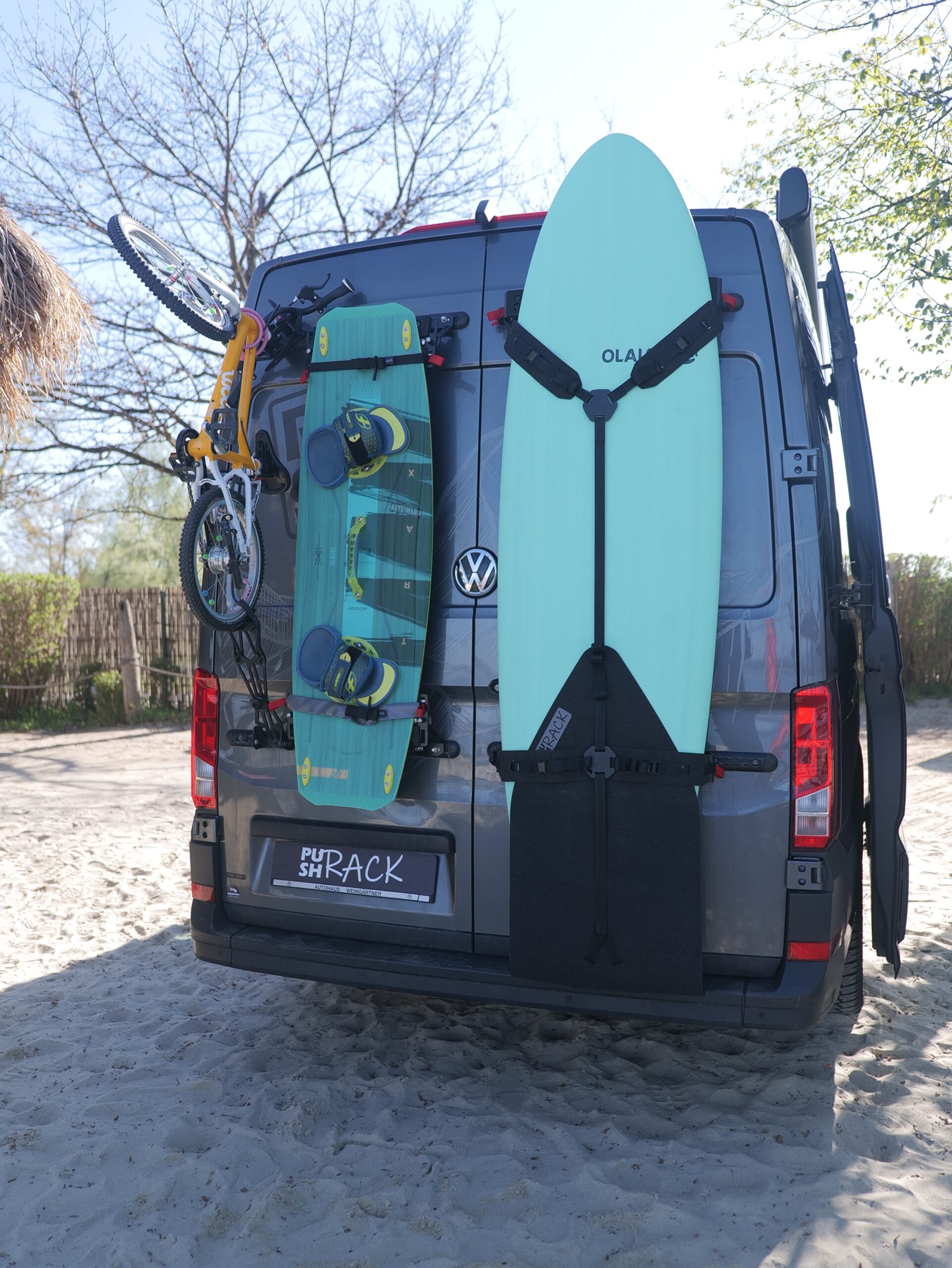
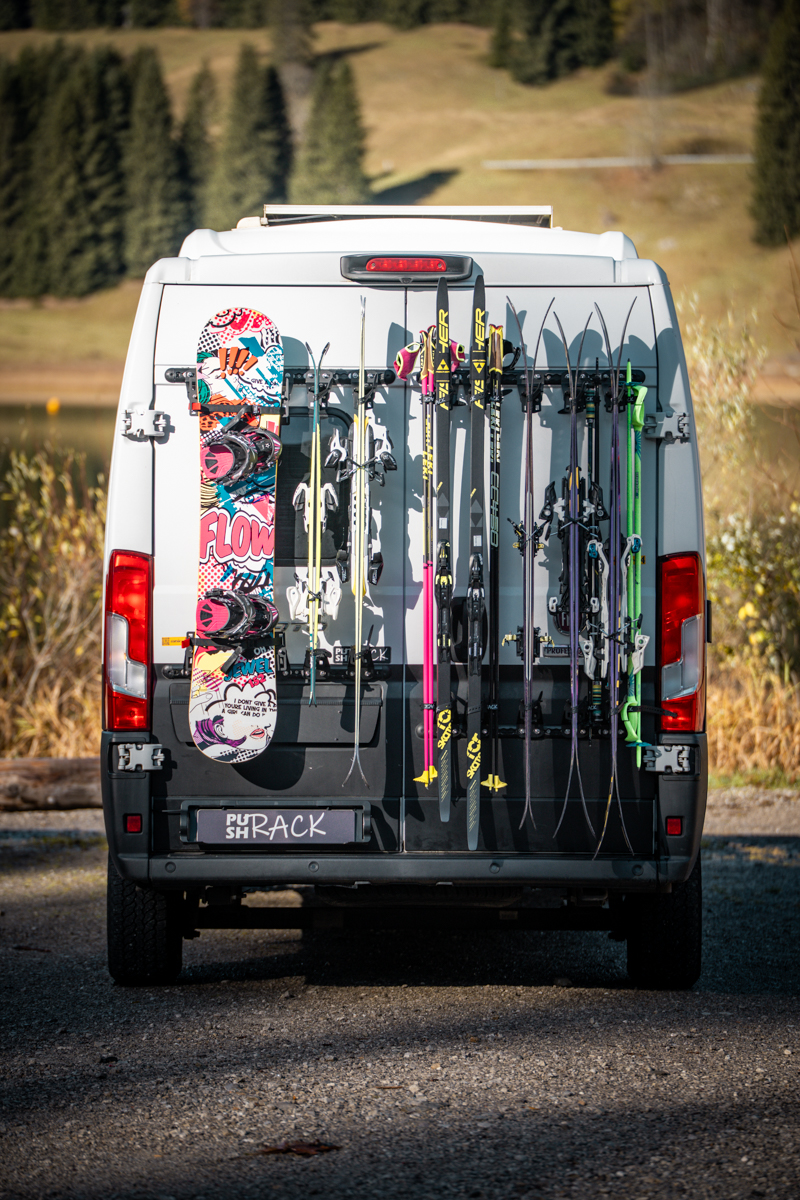
Originally developed for the aviation industry and capable of supporting up to 2,500 kg, these metal rails with their perforated pattern form the foundation for everything you want to transport. Bike racks, surfboard racks, ski racks, e-scooter racks, Room Extenders—everything ultimately attaches to these very rails.
For this reason, we don’t consider them mere accessories; rather, they form the foundation of the entire PUSHrack system.
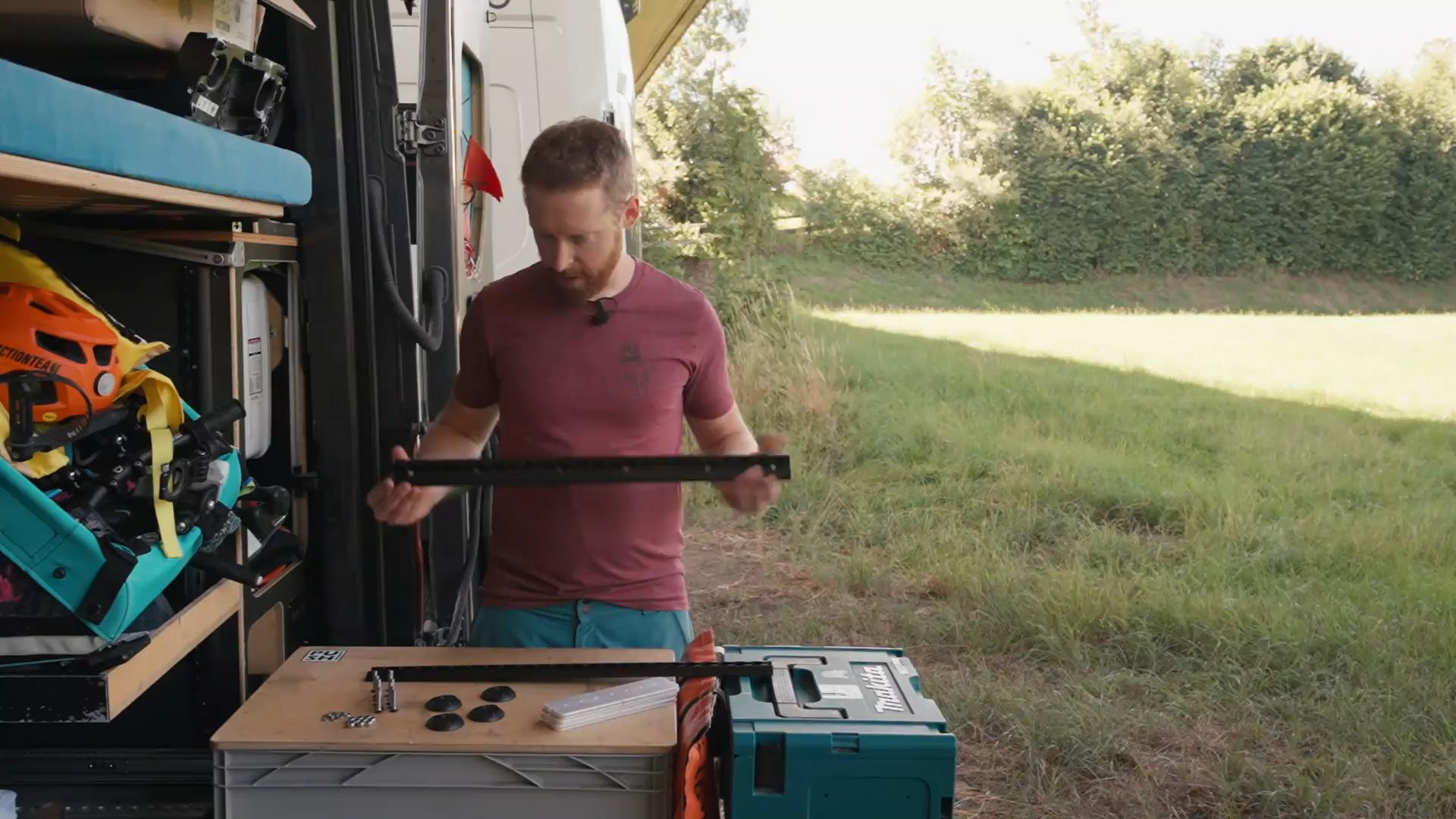
What exactly is an airline rail?
Basically, anything with a groove is referred to as a rail. Counterparts can be inserted into or attached to this groove—in classic profile systems, using so-called groove blocks.
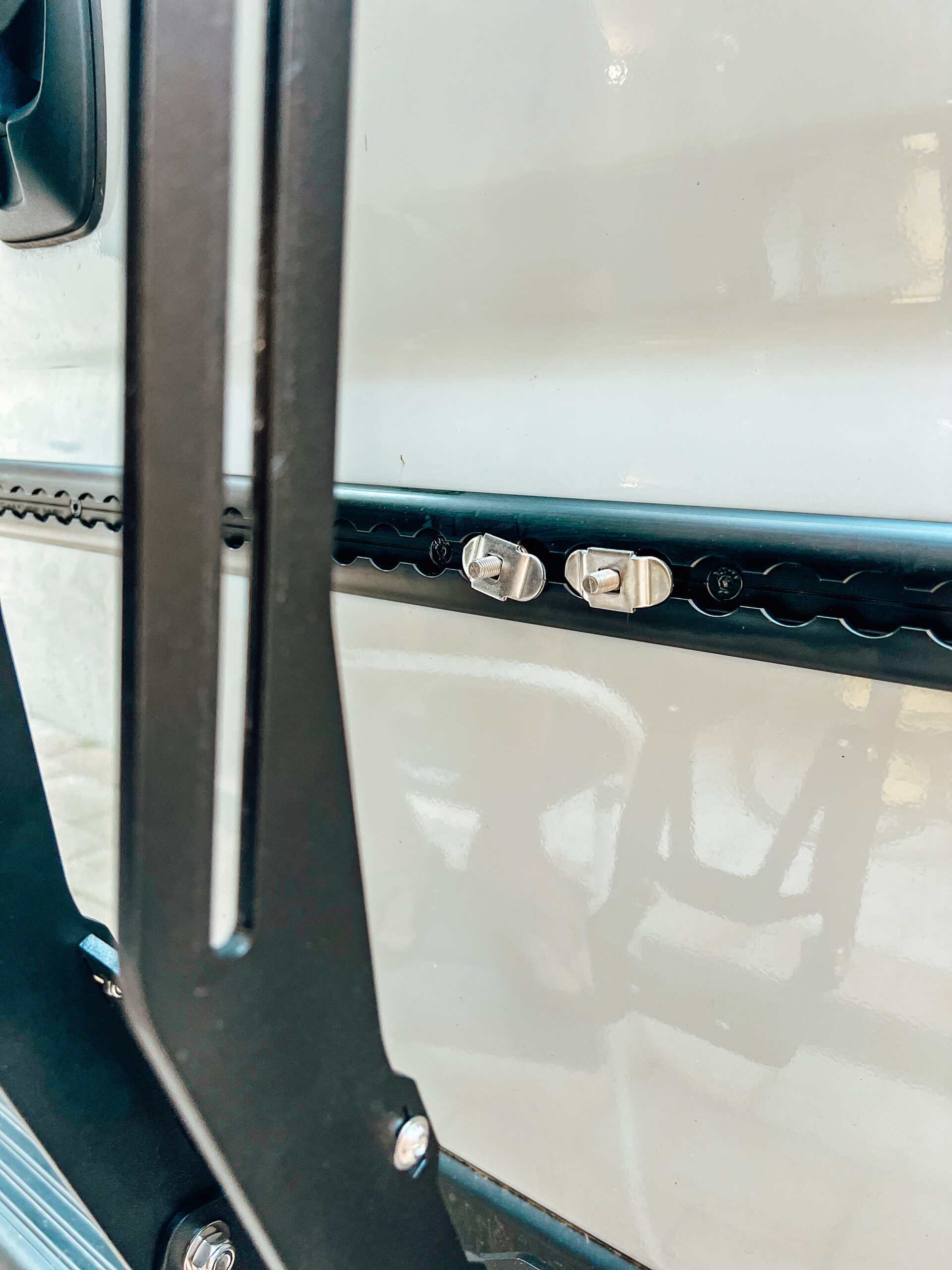
In an airline rail, this groove is interrupted at regular intervals. The distance between the holes is 25 mm, creating a regular hole pattern into which so-called airline fittings can be flexibly inserted. These fittings are the counterpart to the rail: They are inserted into the hole pattern, locked into place, and then form a stable mounting point for carriers, straps, or accessories.
What is often underestimated here is that the load-bearing capacity of these small fittings is enormous; depending on the model, a single airline fitting can hold up to 800 kg. Please note, however, that the rear doors are the limiting factor, which is why we recommend a maximum load of 50 kg per door.
The combination of airline rails with these strong fittings creates a stable, flexible, and—above all—removable connection. That’s exactly what we need in our van.
Not all rails are the same
There are many different rail systems: ITEM profiles, Thule rails, Fiamma rails, or airline rails. No matter which rail system is installed on your van, our products will fit thanks to the various fittings available.
We use 50 mm wide airline rails for our system because they offer the right combination of stability, contact surface, and flexibility. That’s why we exclusively sell airline rails in our shop.
The rails are exposed 24/7 to the elements—rain, snow, sun, dirt, and salt—and must withstand thousands of kilometers on the road. That’s why it’s extremely important that the rails are installed properly and fit the rear doors of your van well. If they also harmonize with the vehicle’s design, everything simply comes together perfectly.
For this reason, it’s important to us not to offer off-the-shelf products. Our rails are custom-made to fit different vehicle types so that they sit on the rear door exactly as it makes the most technical sense.
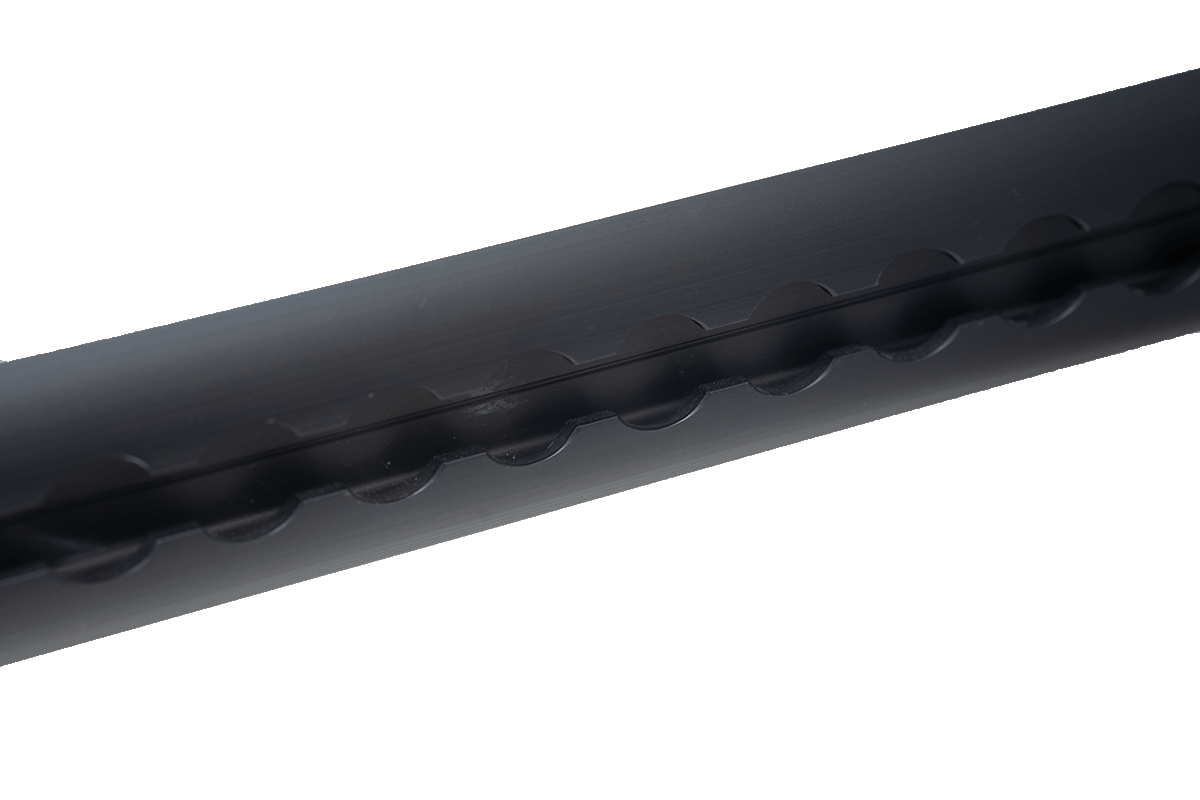
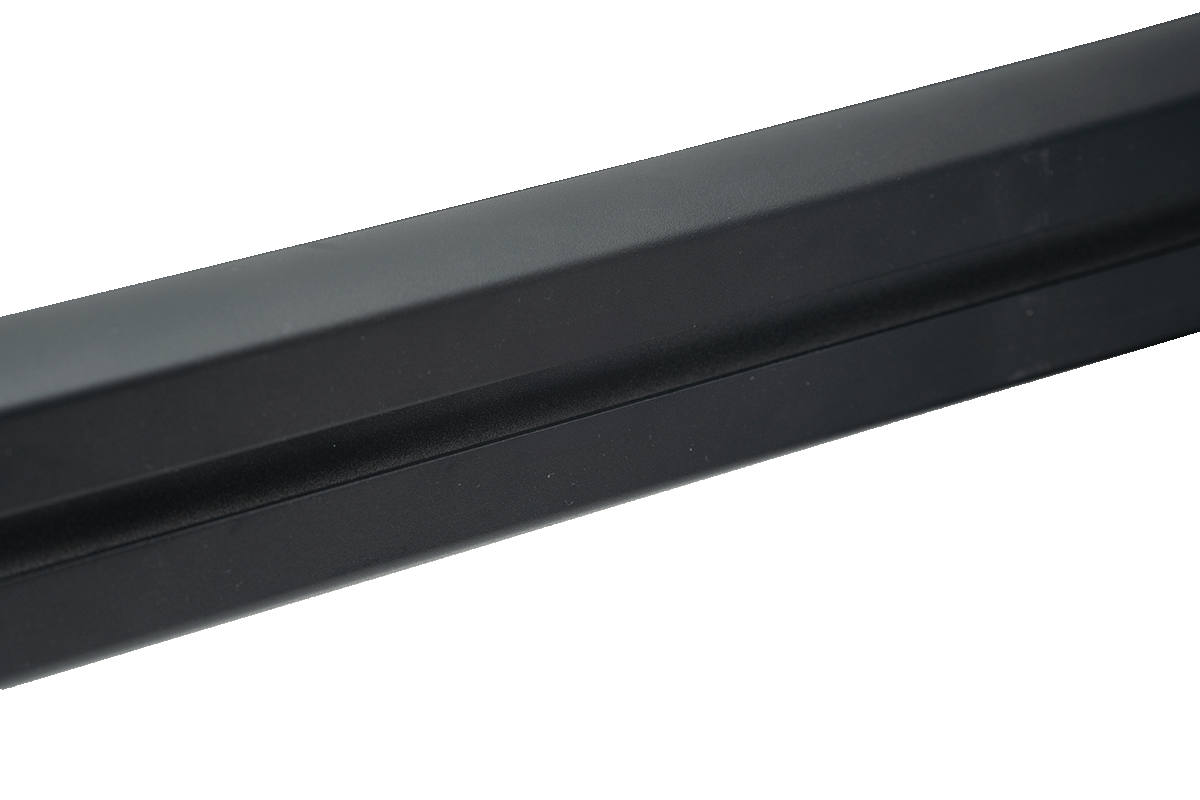
Pre-drilled, countersunk, anodized
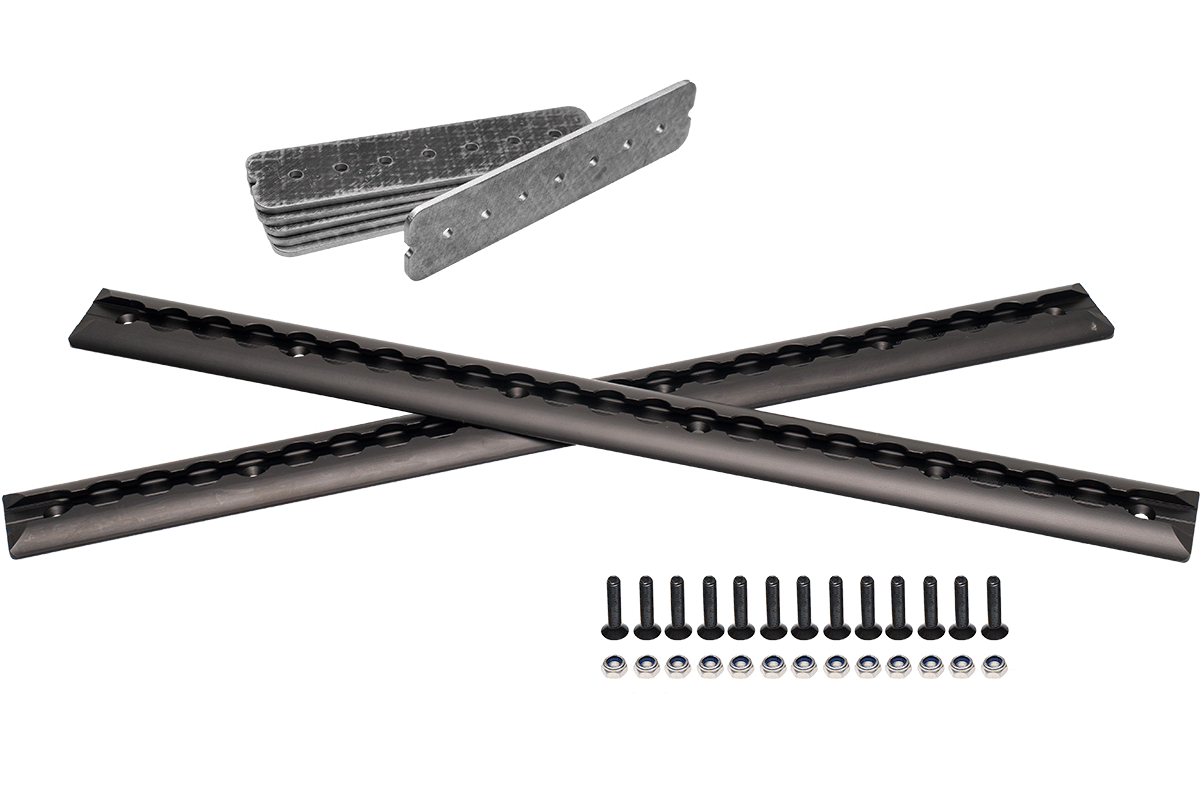
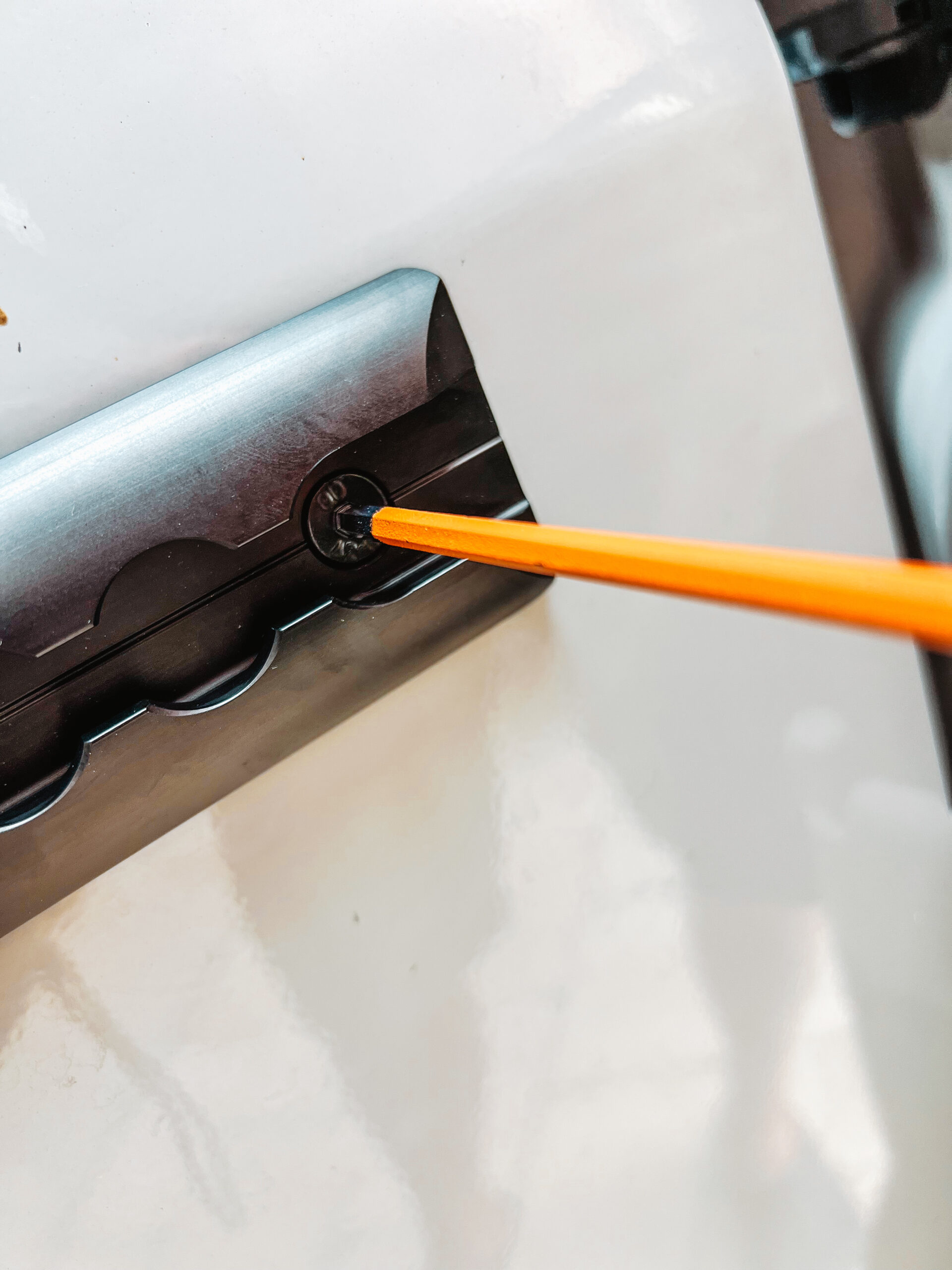
To ensure that installation is secure and as straightforward as possible, our airline rails are pre-drilled and countersunk.
This means that the screw holes are prepared, the countersinks match the screw heads, and the screws sit flush with the rail. As a result, no screw heads protrude, which could later catch on something or prevent the rail from lying flat.
We use stainless steel screws with black heads. We use stainless steel because the rails are mounted on the exterior of the vehicle and are constantly exposed to wind, weather, and moisture. We use black heads because they blend in visually with the black rail and don’t stand out like a foreign object on the surface.
These may sound like minor details—and they are. But in the end, it’s precisely these details that determine whether a product is easy to install, looks clean, and functions well for years to come.
Why Our Rails No Longer Have End Caps
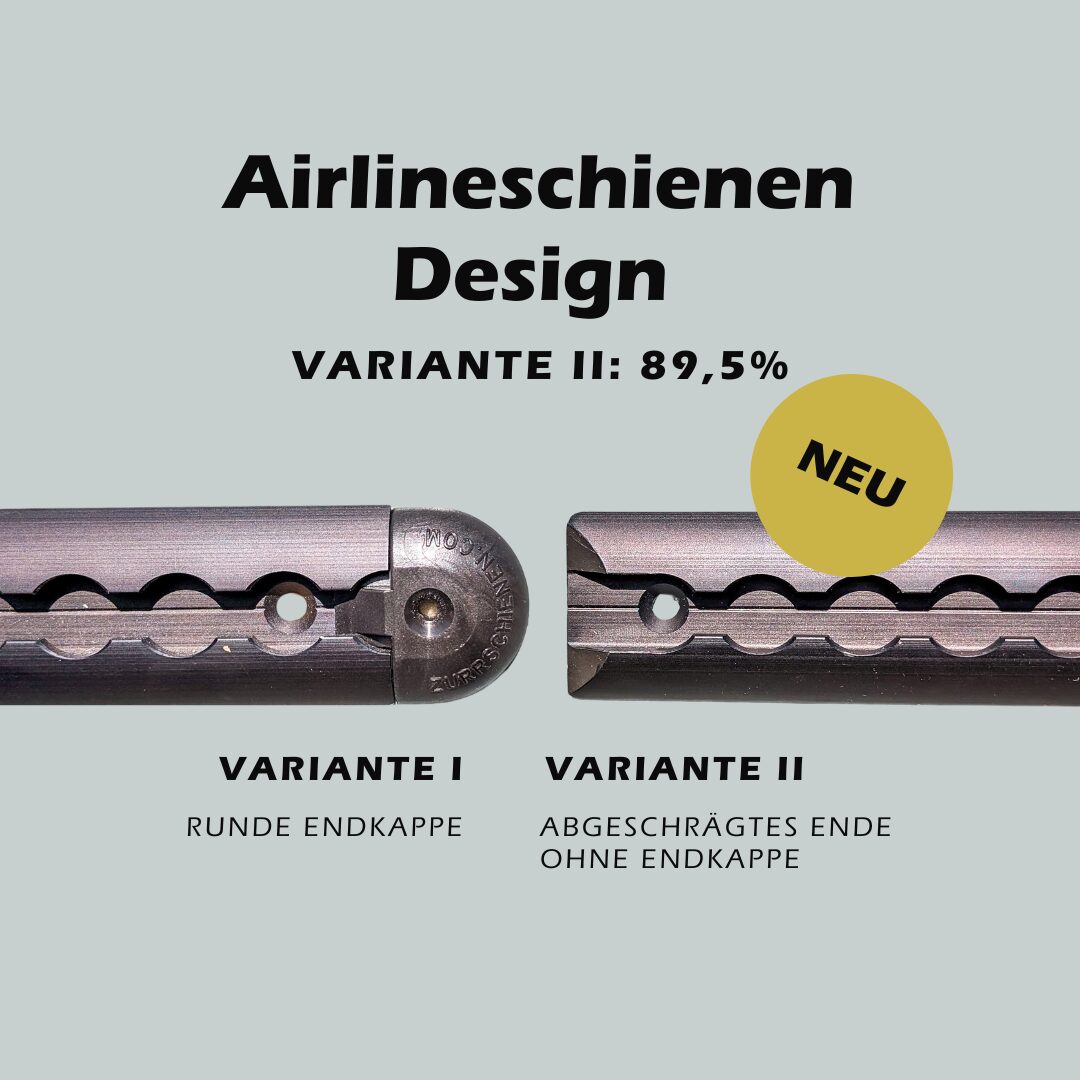
Another detail that we’ve changed: Until 2025, we deliverd our airline rails with end caps. In practice, however, it became clear that these end caps offered little functional benefit: They can come loose and get lost, and they also make installation a bit more cumbersome.
That’s why, since May 2025, we’ve been shipping our rails in a new design. Our current rails are beveled and rounded at the ends and fully black anodized. This gives the rails a more premium look and eliminates any risk of injury from sharp edges, even without end caps.
By the way, we didn’t make this decision on our own. In a customer survey, 89.5% of you indicated that you prefer the new design.
Why anodized and not powder-coated?
Here’s another technical question: Why are our rails anodized instead of simply powder-coated black?
Powder coating (often referred to as “powdering”) is a surface finishing process. In this process, a special powder coating is applied electrostatically to a metal component and then placed in an oven, where the coating first melts and then cures. This applies a layer of color to the surface. This works very well for many components. However, there’s a problem with airline rails: Fittings are regularly inserted into the rail, moved, subjected to stress, and then removed again. With powder-coated rails, this can cause the paint to chip or peel off over time in areas under stress. This isn’t ideal, especially for a component that’s constantly in use and located on the exterior of the vehicle.
With anodizing, the process is different: The rail is immersed in a special bath and an electric current is applied. This creates a protective layer that isn’t simply sitting on top of the material but is firmly bonded to it. As a result, the black color is significantly more resistant to chipping. That doesn’t mean anodized rails are completely indestructible. They can still get scratched. But the coating doesn’t chip off, as is common with painted or powder-coated surfaces.
Important to know: Harsh chemical cleaners can trigger chemical reactions on anodized surfaces. This can cause purple or blotchy discoloration. That’s why we recommend simply cleaning the rails with water and a mild detergent.
The Thing About Screws and Nuts
We realized internally—at the latest during a one-day workshop focused on tools, screws, and sockets—that Lenz really does think of every detail.
Because in our system, it’s not just the rail that’s important. Every connecting part has its purpose, too.
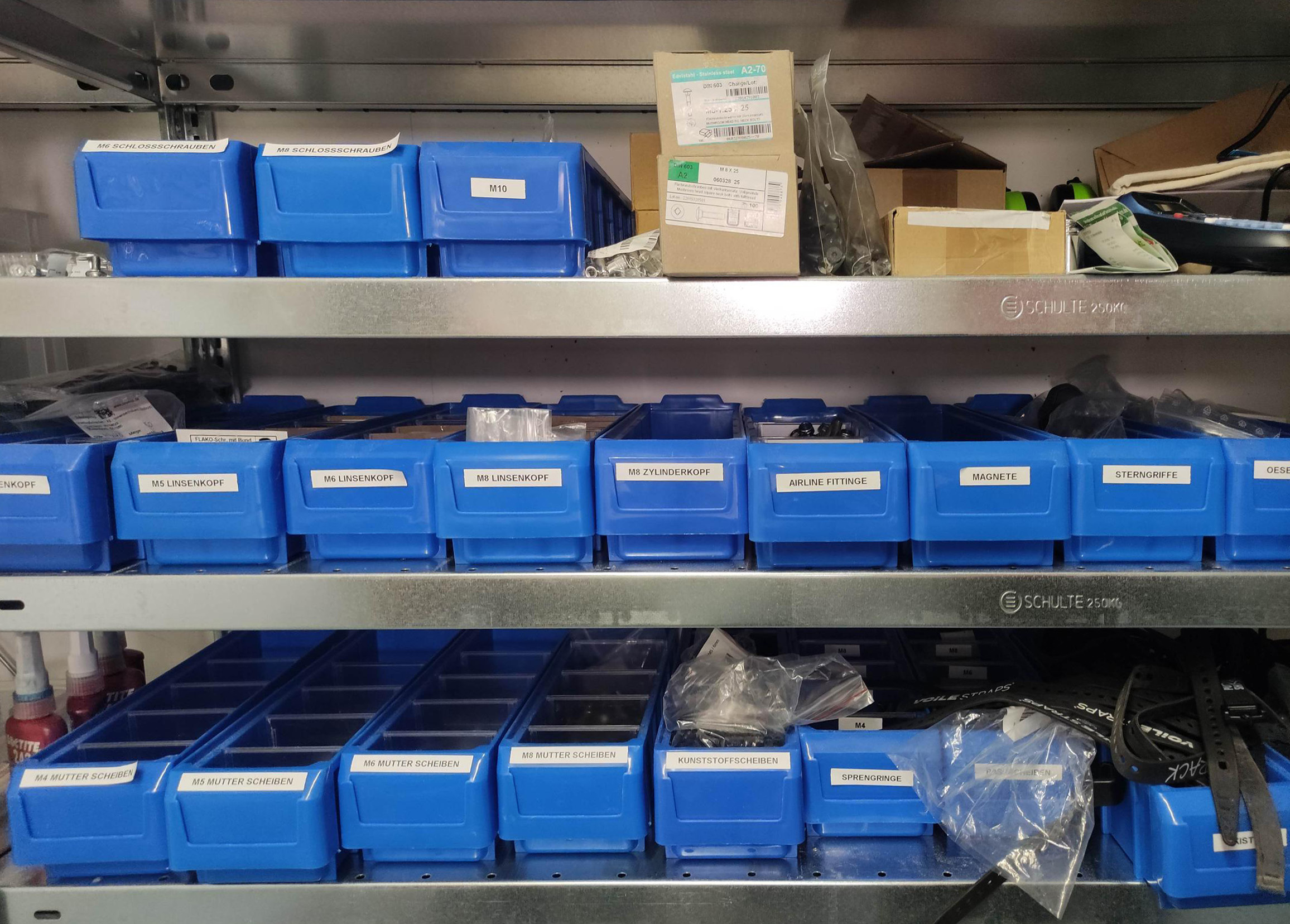
All airline fittings in our system use M8 threads. M8 is a metric thread and offers an excellent combination of stability, availability, and ease of use for our application.
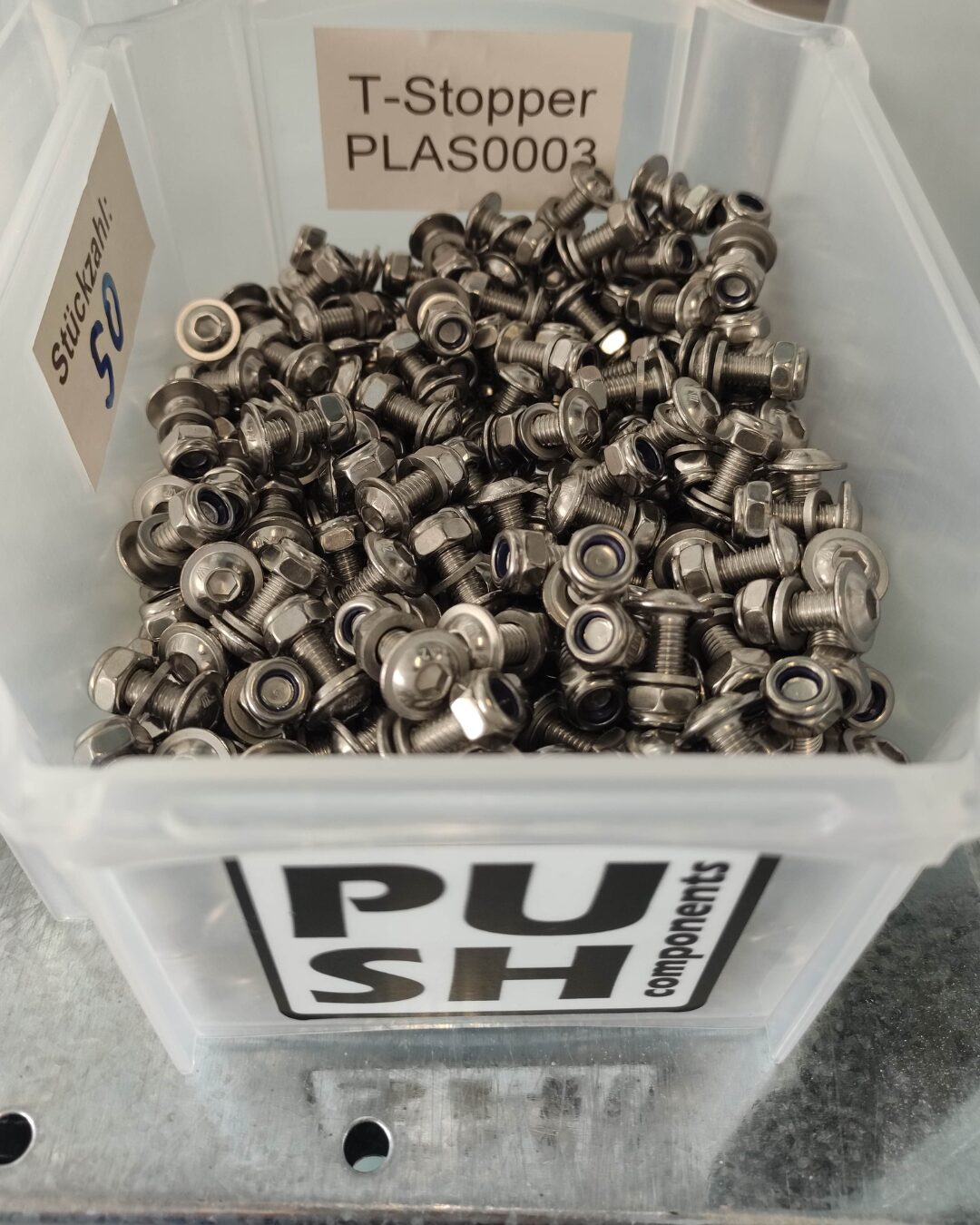
The countersunk screws sit flush with the air rail. Flanged screws provide their own bearing surface because they have a kind of integrated washer. Torque-limiting screws don’t require a traditional tool connection and are suitable for applications where screws are not meant to be loosened. Self-locking sockets with a plastic ring ensure that connections don’t come loose due to vibrations.
And then there’s the knurled socket (in German: Rändelmutter).
Or, as we sometimes call it internally: the mother of all sockets.
It is the oldest component in the PUSH universe. A knurled socket can be turned by hand without any tools at all. Our version is 6 mm high and therefore fits perfectly with our mounting system. This, too, is no coincidence, but rather the result of extensive research and numerous tests, which ultimately ensure that the system works in everyday use.
So why does the Airlines rail set cost more than conventional airline rails?
Because it’s not just a conventional rail.
Our airline rail set isn’t just made up of two black metal profiles. It consists of precisely cut, pre-drilled, pre-countersunk, and anodized 50-mm airline rails. It also includes black screw heads, well-designed fittings, and all the small connecting parts that ensure you can use your PUSHrack system safely, neatly, and flexibly. Not to mention the pre-drilled aluminum reinforcement plates for the inside of the vehicle’s sheet metal.
The rails are the link between your vehicle and the equipment you’re transporting.
That’s why we don’t cut corners here.
Because when you later hang a bike, a surfboard, skis, an e-scooter, or a box on your tailgate, you shouldn’t have to wonder if the base is strong enough.
It’s simply supposed to hold.